
Negotiating salary can feel intimidating for freshers entering the job market for the first time. Many new graduates believe they must accept whatever salary is offered, but the truth is that every candidate has the right to discuss compensation professionally. Learning how to negotiate salary as a fresher not only helps you secure a fair package, but also shows confidence, communication skills, and awareness of your market value. In this article, you will learn practical strategies, real examples, and essential tips to negotiate successfully without sounding demanding or inexperienced.
Why Freshers Should Negotiate Salary
Most freshers hesitate to negotiate salary because they fear losing the offer. However, recruiters expect some level of discussion, as long as it is respectful and realistic. Negotiation shows that you understand your skills, value, and the industry you’re entering. It also helps ensure you receive a competitive package that matches your abilities.
Companies often have flexibility within their fresher salary range, and candidates who negotiate professionally often receive improved offers. That’s why building confidence and communication skills is essential for salary discussions.
Research Salary Standards Before Negotiation
Before you negotiate, it’s important to know the market standards for fresher roles. Research helps you understand what similar companies are paying and what a reasonable salary expectation should be. Freshers who prepare well make better arguments during discussions.
Focus on:
• Average fresher salary in your industry
• Salary range for your job role
• Skills that increase salary value
• Location-based salary variations
When you know the numbers, you can negotiate confidently without sounding unrealistic. This preparation forms the foundation of successful salary negotiation for freshers.
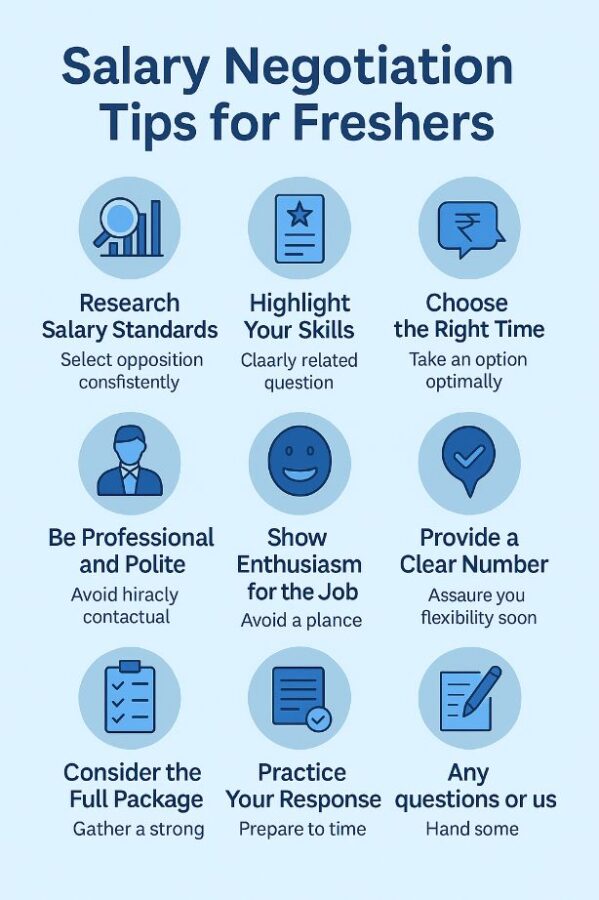
Know Your Skills and Value
Your skills play a major role in determining how much leverage you have during negotiation. Companies pay more for candidates with strong technical or soft skills that match the job.
Highlight skills such as:
• Technical skills like Python, Java, SQL, Excel, or domain-specific tools
• Communication skills
• Problem-solving abilities
• Teamwork and collaboration
• Internships and project experience
• Certifications relevant to the role
When you know what you bring to the table, you can confidently explain why you deserve a better salary.
Choose the Right Time to Negotiate
Timing is crucial. You should negotiate after you receive the job offer, not before. Wait until the company clearly states the compensation package. Once they make an offer, they expect to hear your response.
Appropriate times to negotiate:
• When HR asks, “Do you have any questions about the offer?”
• When they send the offer letter
• When they ask, “Are you comfortable with the salary?”
Avoid negotiating during the initial interview rounds unless they ask directly.
Be Professional and Polite
Your tone during salary negotiation matters more than the numbers. Freshers should stay calm, respectful, and confident. Avoid sounding demanding or aggressive.
Here’s an ideal approach:
“Thank you for offering this position. I am excited to join the team. Based on my research and skills, is it possible to reconsider the starting salary?”
This shows professionalism and confidence without sounding rude.
Show Enthusiasm for the Job
Companies want candidates who are genuinely interested in the role. When negotiating, always express your excitement about joining the company. This builds trust and increases your chances of receiving a revised offer.
You can say something like:
“I am really looking forward to working with your team. This opportunity aligns perfectly with my goals. I wanted to discuss if there is flexibility in the starting salary.”
This makes the negotiation feel positive and constructive.
Provide a Clear and Reasonable Salary Expectation
Avoid saying “I want a higher salary” without giving a supporting reason. Instead, share a realistic figure based on your research. Be prepared to justify it without sounding unrealistic.
Good example:
“Based on my research and the industry range, a starting salary of around ₹4.5 LPA would match the skills and responsibilities expected for this role.”
Avoid quoting 2–3 lakhs above the standard range, as it may sound inappropriate for a fresher.
Highlight Your Strengths During Negotiation
When negotiating, remind the interviewer of the strengths that make you valuable.
You can mention:
• Your technical projects
• Certifications
• Internship experience
• Problem-solving abilities
• Team collaboration
• Adaptability and willingness to learn
This helps the company see the value you bring and makes your request more convincing.
Be Prepared for HR Responses
HR may respond in different ways during negotiation. As a fresher, you should stay confident and prepared for all possibilities.
Common HR replies:
“This is the standard fresher salary.”
Respond politely:
“I understand. Considering my skills and experience, is there any flexibility within the upper range?”
“We can offer a small increase.”
Accept if it’s reasonable, or ask for final clarity:
“Thank you. Can we finalize the revised package in the offer letter?”
“We cannot increase the salary.”
If the company is good and the role fits your goals, you may still accept the offer.
Negotiation is not just about salary — it’s about clarity, communication, and professionalism.
Consider Total Compensation, Not Just Salary
Many companies offer benefits that add value beyond salary. Evaluate the full package, including:
• Training and certifications
• Health benefits
• Work-from-home flexibility
• Bonuses or performance pay
• Career growth opportunities
• Learning opportunities
• Job stability
A slightly lower salary may still be worth accepting if the overall benefits are strong. Freshers should look at long-term growth rather than just the first year’s salary.
Practice Before the Negotiation Call
Practicing your negotiation points helps you sound confident and organized during the real discussion. Freshers can practice in front of a mirror, with friends, or by recording themselves.
Focus on:
• Tone of voice
• Clear wording
• Confidence
• Staying calm under pressure
The more you practice, the easier it becomes to negotiate professionally.
When You Should Avoid Negotiation
Negotiation is important, but there are cases where it might not be the right move.
Avoid negotiating when:
• The company clearly states “non-negotiable salary”
• The offer is already above the industry average
• You lack strong justification
• You are applying for a highly competitive role with many applicants
In these cases, accepting the offer may be better.
Example of a Fresher Negotiation Script
Here’s a simple and professional negotiation script:
“Thank you for offering me this position. I’m excited about this opportunity and confident that I can contribute effectively. Based on my research and the skills I bring, I wanted to know if there is any flexibility to revise the starting salary to around ₹X. I would truly appreciate it if you could consider this request.”
This script shows clarity, confidence, and politeness.
Final Thoughts
Negotiating salary as a fresher may feel challenging, but it is completely doable with the right approach. By researching industry standards, understanding your value, and communicating professionally, you can secure a competitive package that reflects your skills and potential. Remember, the goal is not only to increase salary but also to build confidence and show professionalism during discussions. With the right strategy and mindset, freshers can negotiate successfully and start their careers on a strong foundation.